Why the Sky Below 1,000 Feet is the Next Economic Frontier
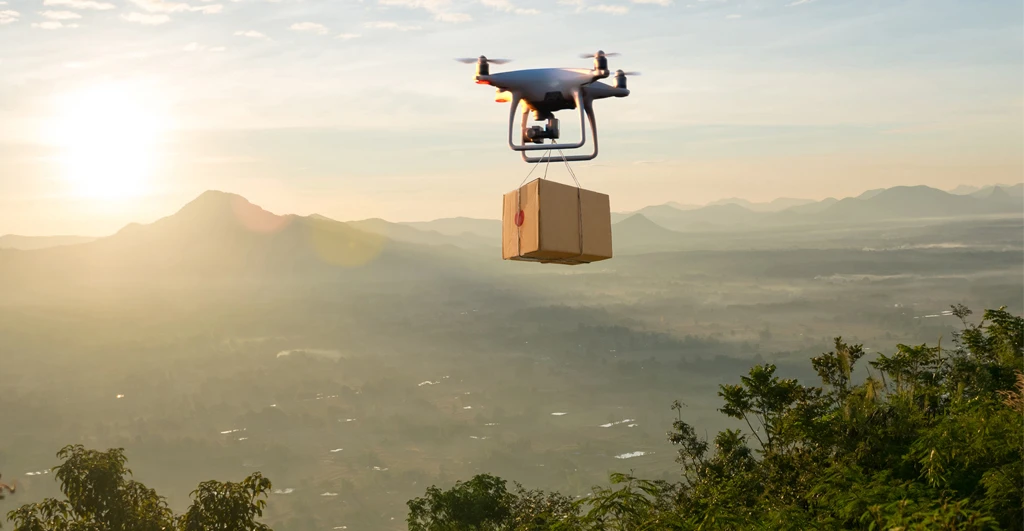
The sky, which was once reserved for birds and planes, is now becoming a critical layer of the digital economy, right above our rooftops. This is the domain of the Low Altitude Economy (LAE), and it is powered by drones, eVTOLs, as well as a new class of intelligent, secure, and connected platforms.
This transformation is being driven by four converging forces:
- Integrated Sensing and Communication (ISAC)
- 6G Networks
- Non-Terrestrial Networks (NTN)
- RAN Intelligent Controller (RIC) platforms
Together, these technologies are enabling high-assurance, low-latency, and intelligent flight and service operations at scale, laying the foundation for a multi-trillion-dollar opportunity.
What Is the Low Altitude Economy?
The Low Altitude Economy includes all economic activity occurring in the airspace below 1,000 feet, which is often in urban and suburban environments. It builds a vertical extension to ground infrastructure, creating an entirely new layer of services, logistics, monitoring, and mobility.
Key Enablers for the Low Altitude Economy:
- Unmanned Aerial Vehicles (UAVs/Drones): For delivery, inspection, monitoring, and emergency response
- eVTOLs (Electric Vertical Take-Off & Landing Aircraft): Flying taxis and cargo haulers for intra-city mobility
- RIC Platforms: Using dApps/xApps/rApps to manage UAV swarms, allocate radio resources, and apply AI-driven policies for service orchestration
- ISAC: Co-designing sensing and communication to support obstacle avoidance, tracking, and environmental awareness
- 6G & NTN: Ensuring always-on connectivity even in remote or unstructured airspace
The Role of the RIC Platform in the Low Altitude Economy
The RAN Intelligent Controller (RIC) plays a foundational role in making the Low Altitude Economy adaptive, programmable, and secure.
RIC Use Cases in Low Altitude Economy:
| Use Case | RIC Functionality |
| UAV Beam Tracking | AI-driven beam alignment and Doppler-resilient communication via xApps |
| Flight Path Optimization | rApps schedule flight corridors based on congestion and energy budgets |
| Spoofing Detection | Real-time GNSS interference classification via telemetry-aware xApps |
| Dynamic Spectrum Allocation | RIC reallocates spectrum based on UAV density, emergency status, or QoS class |
| Mission-Aware Resource Control | rApps prioritize radio resources based on UAV task (e.g. medical delivery versus surveillance) |
These functions enable resilient, intelligent orchestration of the aerial network infrastructure, aligned with O-RAN and 3GPP standards.
Security in the Low Altitude Economy
Security is not optional in the Low Altitude Economy; it’s mission critical.
Threat Vectors:
- GNSS Spoofing: Manipulating positioning systems to misguide UAVs
- Jamming: Disrupting command-and-control channels
- Data Interception: Compromising payload integrity (e.g. surveillance footage, sensor logs)
- Unauthorized UAV Access: Rogue or cloned drones entering controlled airspace
Enablers for LAE Security:
- ISAC: Detects physical anomalies through sensing while maintaining secure communications
- RIC: Enforces security policies across the air interface, leveraging AI models to classify threats in real time
- 6G Native Trust: Leverages blockchain, post-quantum cryptography, and zero-trust architecture for drone identity and communication
Use Cases Spanning ISAC, 6G, NTN & RIC
| Use Case | RIC Functionality |
| UAV Beam Tracking | AI-driven beam alignment and Doppler-resilient communication via xApps |
| Flight Path Optimization | rApps schedule flight corridors based on congestion and energy budgets |
| Spoofing Detection | Real-time GNSS interference classification via telemetry-aware xApps |
| Dynamic Spectrum Allocation | RIC reallocates spectrum based on UAV density, emergency status, or QoS class |
| Mission-Aware Resource Control | rApps prioritize radio resources based on UAV task (e.g. medical delivery versus surveillance) |
Why Now? The Enabling Tech Convergence
| Technology | Impact on the Low Altitude Economy |
| ISAC | Dual-purpose spectrum for sensing and communications to help with efficiency and synchronization |
| 6G | Sub-ms latency, massive MIMO, edge-native intelligence |
| NTN | Redundant, high-availability coverage for off-grid or disaster zones |
| RIC | Programmable control over UAVs, comms, and telemetry policies |
| AI/ML | Autonomous decision making for safe navigation and service orchestration |
Barriers to Scale and Adoption for the Low Altitude Economy
- Airspace Regulation: Fragmented policies delay commercial scale
- Interference Management: Coexistence between terrestrial and aerial nodes need refinement
- Public Trust: UAV privacy, noise, and cybersecurity remain top concerns
- Infrastructure Gaps: Vertiports, charging docks, and C2 networks need investment and standardization
These challenges are not roadblocks, but they are opportunities for cross-industry collaboration.
Looking Ahead to the Low Altitude Economy in a 6G World
In the 6G era, the Low Altitude Economy will:
- Be AI-native, with autonomous RIC controllers scaling drone traffic safely
- Leverage NTN backhauls to provide global coverage, even in forests, oceans, or combat zones
- Use ISAC for next-generation applications like 3D mapping, motion sensing, and proactive risk detection
- Operate as part of a “sky-as-a-platform” paradigm for logistics, intelligence, entertainment, and urban development
The Sky Is Open for Business
The Low Altitude Economy is not a concept, but a living, evolving infrastructure. It has already begun transforming logistics, security, healthcare, and mobility. As ISAC, 6G, NTN, and RIC platforms converge, Low Altitude Economy will accelerate to become secure, intelligent, and accessible to both urban metropolises and remote hinterlands.
The next digital revolution isn’t in deep space. It’s 300 meters above ground and it’s time to look up.
Learn how 1Finity, a Fujitsu company, combines technological leadership and expertise in open optical and wireless networking, network automation, and applied AI/ML to design, build, operate, and maintain critical digital communications network infrastructure.